
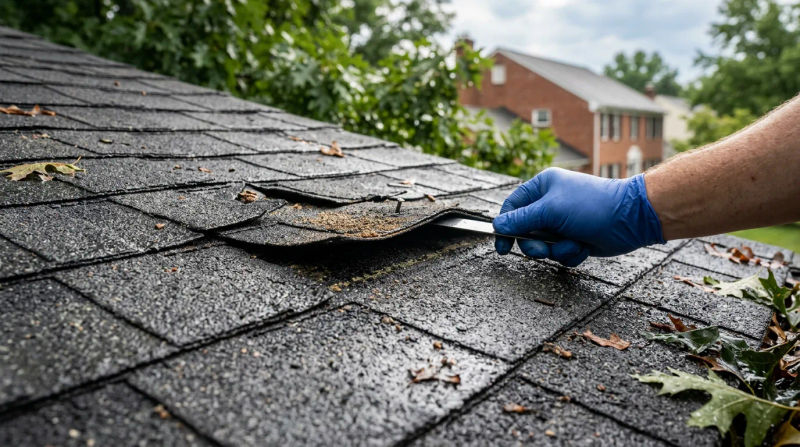
The sound of a July thunderstorm rolling through Claymont is familiar to all of us. The heavy rain, the flashes of lightning, and the unmistakable roar of gusty winds coming off the river. The next morning, you look outside, and everything seems fine. The trees are still standing, and there are no shingles scattered across your lawn. It’s easy to assume your roof weathered the storm without a problem. However, from my years of experience as a Senior Roofing Specialist in this area, I know that the most common type of storm damage is also one of the hardest to see from the ground: wind lifted shingles.
These are shingles that the wind has managed to peel up, breaking their adhesive seal, but not torn off completely. They often settle back down, looking normal from a distance. But the seal is broken, leaving a hidden entry point for the next downpour. Catching this issue early is crucial to preventing mid-summer leaks and the costly interior water damage that can follow.
Common Signs and Symptoms
After a significant storm, taking a few minutes to assess your roof from the safety of the ground can reveal subtle shingle blow-off warning signs. While a comprehensive evaluation requires a trained eye and safe roof access, here are several indicators you can look for that suggest you may have a problem.
- A Wavy or Uneven Appearance: Stand back from your home and look at the planes of your roof. Do the shingles appear to lie perfectly flat, or do some areas look bumpy, wavy, or slightly raised? Shingles that have had their seals broken by the wind may not lie as flat as the surrounding ones.
- Visible Creases or Folds: This is a tell-tale sign of wind lift. Look for a distinct horizontal crease running across the face of a shingle. This happens when the wind bends the shingle back far enough to create a permanent fold but doesn't rip it off. This crease represents a significant weak point that will eventually crack and fail.
- Accelerated Granule Loss: After a storm, check your gutters and the areas around your downspouts. A small amount of granule loss is normal over a roof's lifespan, but if you see a large accumulation of these sand-like particles, it often means your shingles were flapping violently in the wind. This flapping motion scrubs off the protective granules, exposing the underlying asphalt to UV rays and accelerating its deterioration.
- Exposed Nail Heads: When a shingle is lifted, it can pull on the fastener holding it in place. Sometimes, this action can work a nail head up, leaving it exposed. An exposed nail is a direct path for water to travel into your roof deck and attic.
- Misaligned Shingle Lines: Look at the horizontal lines (courses) of your shingles. Do they appear straight and uniform, or are some shingles slightly crooked or pushed up? Wind can shift unsealed shingles, breaking the clean, symmetrical pattern of a properly installed roof.
- New, Unexplained Ceiling Stains: The most urgent sign of a problem is evidence of a leak inside your home. A small, yellowish or brownish stain on a ceiling or wall that appears after a rainstorm is a clear signal that water has already breached your roof. Wind-lifted shingles are a very common culprit.
- Sounds of Flapping: On the next windy day, try to listen for any unusual noises coming from your roof. A light rattling or flapping sound could be a loose shingle that is repeatedly lifting and settling with each gust of wind.
What Causes This Problem
Understanding why shingles lift in the first place helps homeowners appreciate the forces at play. It’s not just about wind speed; it’s about how that wind interacts with your roof system. High winds moving over a roof create a powerful pressure differential, essentially producing lift, much like on an airplane wing. This upward suction is what pulls at the edges of your shingles.
Several factors make a roof more susceptible to this uplift:
- Failed Adhesive Seal: Every shingle has a thermally activated asphalt sealant strip. Over time, due to age and exposure to the elements, this seal can dry out and lose its adhesive properties. Once that bond is weakened, it takes much less wind force to lift the shingle.
- Improper Nailing: This is one of the most common installation errors our technicians find during inspections. If shingles are “high-nailed” - meaning the nails are placed above the designated nailing strip - they are not properly secured. The nail is only pinning the top of the shingle, leaving the bottom edge free to be caught and lifted by the wind. A properly driven nail secures both the shingle it's in and the top of the shingle below it.
- Age and Brittleness: As an asphalt roof ages, the shingles become less flexible and more brittle. An older, brittle shingle is more likely to crack or have its sealant fail when subjected to the stress of high winds.
- Complex Roof Geometry: Here in the Claymont area, we have beautiful, historic homes, such as the pre-1940s Arts and Crafts and Tudor Revival styles seen in neighborhoods like Arden. These properties often feature complex rooflines with multiple gables, dormers, and valleys. While architecturally stunning, these designs create more edges and transitions where wind can catch and create uplift. Meticulous installation and maintenance are paramount for these intricate roofs.
When to Call a Professional
While identifying potential issues from the ground is a great first step, diagnosing the full extent of what to do after roof wind damage requires a professional assessment. Walking on a roof is inherently dangerous for an untrained individual, and it can also cause more damage to the shingles if not done correctly.
You should schedule a professional Claymont DE storm roof inspection if:
- You notice any of the signs mentioned above, even if they seem minor.
- Your home is in an area that experienced particularly high winds.
- Your roof is over 10 years old, as its resistance to wind is likely diminished.
- Your neighbors are having their roofs inspected or repaired after a storm.
When experienced professionals arrive, they follow a standardized process. Our technicians are trained to safely access the roof and perform a hands-on evaluation. They will gently lift shingle tabs to check the condition of the sealant strips, inspect for proper nailing patterns, check flashing around chimneys and vents, and document any and all findings. This systematic approach ensures nothing is missed and provides you with a clear, accurate picture of your roof's health.
Acting quickly to have a few wind lifted shingles identified and resealed by a qualified professional is a small, inexpensive repair. Waiting until you have an active leak can lead to much more extensive and costly repairs involving insulation, drywall, and potential mold remediation.
Conclusion
After a summer thunderstorm, the absence of shingles on your lawn doesn't guarantee your roof is undamaged. Wind lift is a subtle and insidious problem that can compromise your home’s primary defense against the elements. By learning to spot the early warning signs - like creased shingles, excessive granule loss, and uneven roof surfaces - you can take a proactive stance on your home’s maintenance.
Don't wait for a small ceiling stain to tell you there's a problem. An early and thorough inspection can identify these vulnerabilities before they turn into major leaks. Being proactive is the key to protecting your investment and ensuring your roof continues to perform as it should through every season.
If you notice any of these signs, contact a local roofing professional for an inspection.