
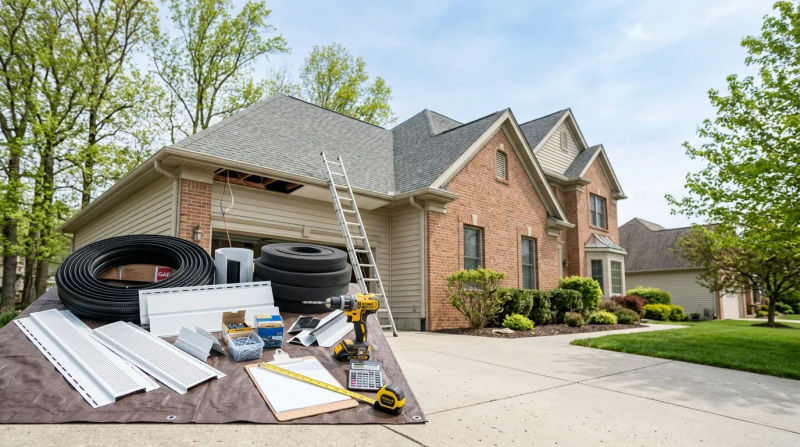
As a Senior Roofing Specialist with over a decade of experience here in the Claymont area, I know that when spring arrives, homeowners start thinking about their roofs. After a long, cold-climate winter with its freeze/thaw cycles, moisture can accumulate in your attic. Now, with summer heat on the horizon, addressing your home's ventilation is one of the smartest investments you can make. Cost is always a top concern, and rightly so. My goal with this guide is to provide transparent, practical information about the attic ventilation cost in our area, helping you budget wisely for a project that protects your home and improves its efficiency.
May is the perfect window for this kind of work. The weather is generally stable, allowing our crews to work safely and efficiently, and it’s the ideal time to dry out any lingering winter dampness before the summer humidity sets in.
Average Costs in Claymont
It's important to understand that these are average price ranges. The final cost will depend on the specific factors of your home, which we'll cover in the next section. All prices include professional installation by a trained and insured team.
- Ridge Vent Installation: This is often the most effective and efficient form of exhaust ventilation. It creates a continuous, even flow of air out of the attic along the entire peak of the roof. The ridge vent install price Claymont DE typically ranges from $25 to $45 per linear foot. For a 50-foot roof ridge, you could expect to pay between $1,250 and $2,250. This process involves cutting a space in the roof sheathing at the peak, installing the vent, and covering it with matching shingles.
- Soffit Vent Installation: Proper ventilation requires a balanced system of intake (air coming in) and exhaust (air going out). Soffit vents provide that crucial intake. The soffit vent retrofit cost Delaware can vary significantly, usually from $25 to $50 per vent for standard rectangular vents. However, for older homes, especially the pre-1940s brick rowhouses common in our region, retrofitting can be more complex if soffits are solid wood or blocked, pushing costs higher. Continuous strip vents will be priced per linear foot, similar to ridge vents.
- Powered Attic Fans (PAVs): These are mechanical fans that actively pull hot air out of the attic. While they move a lot of air, they have drawbacks. The powered attic fan cost cold climate installation ranges from $600 to $1,200, including the fan itself and the necessary electrical work. In our climate, they can sometimes create negative pressure, pulling conditioned air from your living space into the attic, which is inefficient. They are also another mechanical component that can fail.
- Static Vents (Box Vents) or Gable Vents: These are simpler, passive vents. Installation is generally less expensive, often $150 to $350 per vent. While better than nothing, they don't provide the same even, continuous airflow as a ridge vent system.
Factors That Affect Price
No two roofing jobs are identical. During an inspection, our technicians look at several key variables that influence the final quote. Understanding these will help you see where your money is going.
- Roof Complexity and Pitch: The unique architecture in our area, particularly the pre-1940s homes with a steep-pitched front and a low-slope or flat main roof, presents a challenge. Working on steep pitches requires more safety equipment and time. Complex rooflines with multiple hips and valleys require more intricate cutting and sealing for a ridge vent system.
- Existing Structure and Conditions: Is this a simple upgrade or a full retrofit? Many older homes have blocked or non-existent soffits. Clearing blockages or creating new openings for intake ventilation is labor-intensive and adds to the cost. If we discover rotted wood decking or fascia during the installation, that will need to be repaired, which is an additional cost.
- Accessibility: A home surrounded by extensive landscaping or with a very high roofline can increase labor time and setup costs.
- Type and Quality of Materials: Just like with shingles, there are different grades of ventilation products. We recommend and use materials that offer proven durability and performance to ensure your investment lasts.
- Balancing the System: A common mistake is adding exhaust ventilation (like a ridge vent) without ensuring there's enough intake (soffit vents). A professional assessment will calculate the required Net Free Vent Area (NFVA) for your specific attic size and create a balanced plan. This might mean the project is larger than just installing one type of vent, affecting the overall attic ventilation cost.
How to Get the Best Value
Getting the "best value" isn't about finding the cheapest price; it's about investing in a solution that provides the best long-term performance and protection for your home.
- Prioritize a Balanced System: Don't let a contractor talk you into just adding a powered fan as a quick fix. A balanced, passive system using ridge and soffit vents is often more effective, silent, and requires no electricity or maintenance.
- Bundle with a Roof Replacement: If your roof is nearing the end of its life, the most cost-effective time to upgrade your ventilation is during the roof replacement. The decking is already exposed, making it much easier and cheaper to install ridge vents and check soffits.
- Think Long-Term: Proper attic ventilation extends the life of your shingles by keeping the roof deck cooler. It also helps prevent ice dams in the winter and reduces moisture that can lead to mold and rot. The few thousand dollars you spend now can save you tens of thousands in future repairs.
Questions to Ask Your Contractor
When you get estimates, you are interviewing a company for an important job. Use these questions to gauge their expertise.
- How will you calculate the right amount of ventilation for my home?
- Will you inspect the attic and soffits for intake airflow before providing a quote?
- What is your plan for balancing intake and exhaust ventilation?
- What specific products do you recommend and why?
- What happens if you find rotted wood or other issues during the installation? How is that handled and billed?
- Are your installation crews trained specifically on ventilation systems and insured?
An experienced contractor will have clear, confident answers to these questions. At Stewart MacGyver's roofer Co, our standardized workflows ensure that every project begins with a thorough inspection and a clear plan tailored to the home.
Proper attic ventilation is a critical component of a healthy, long-lasting roofing system, especially in a climate like ours. It's not just about comfort; it's about protecting the very structure of your home from heat, moisture, and premature aging. Taking the time to understand the costs and find a qualified professional will pay dividends for years to come.
For a personalized estimate in Claymont, contact Stewart MacGyver's roofer Co for a free consultation.