
As a Senior Roofing Specialist with Stewart MacGyver's roofer Co, I’ve seen firsthand what a Delaware thunderstorm can do. The call came in late on a Tuesday afternoon, just as the last of a powerful late-summer storm system was moving out of the Claymont area. The homeowner was understandably frantic. They had heard a loud crack, followed by the unmistakable and gut-wrenching sound of water dripping inside their attic. For any homeowner, it’s a nightmare scenario, and it’s why our team is always prepared to provide emergency roof repair when our community needs it most.
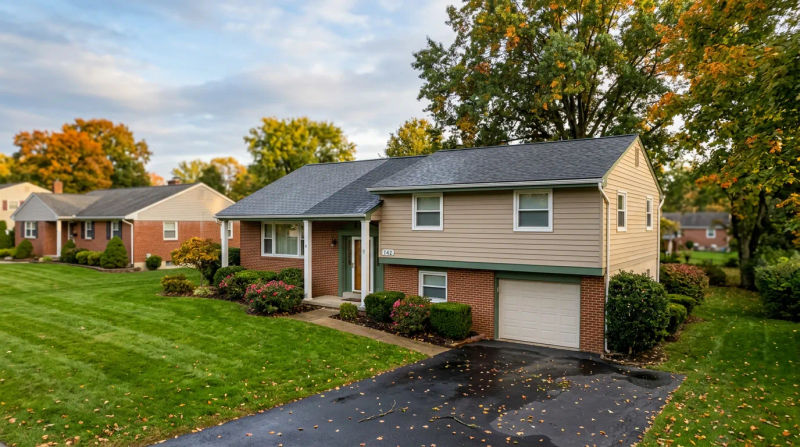
The home was located in a neighborhood near Trainer, a classic post-WWII development filled with the sturdy, two-story brick and siding homes built in the 1940s. These houses were built to last, but their simple gabled roofs, now several decades old, are prime targets for the kind of storm damage we see this time of year. A falling limb doesn't just damage a few shingles; it can compromise the entire structure. The homeowner knew they needed a fast response to prevent a small leak from becoming a catastrophic interior problem, and they made the right choice by calling Stewart MacGyver's roofer Co for our rapid, same-day roof leak service Delaware.
The Assessment
I arrived on-site within an hour of the initial call. The first priority in these situations is always safety and immediate damage control. The culprit was easy to spot: a heavy oak branch, about six inches in diameter, had snapped off during the high winds and speared the roof on the rear slope of the house. It had created a significant puncture, not just through the asphalt shingles but clear through the underlying plywood sheathing. Water was actively dripping into the attic space below.
This kind of damage on a 1940s-era home presents specific challenges. The original construction often used plank decking or early forms of plywood that, once saturated, can lose structural integrity and become a breeding ground for mold. In Claymont's climate, where late-summer humidity gives way to cooler autumn nights, trapped moisture is a serious concern. My immediate task was to determine the full extent of the water intrusion.
Using a thermal imaging camera, I was able to map the spread of moisture from inside the attic. The water hadn't just affected the area directly below the puncture; it had wicked sideways along the rafters and begun to saturate a roughly 6-by-8-foot section of insulation. This confirmed that a simple patch wouldn't be enough. We needed a comprehensive roof puncture repair Claymont DE that addressed the shingles, the decking, and the affected insulation to prevent long-term issues. I documented everything with photos and shared my findings with the homeowner, explaining exactly what needed to happen to make their home safe and dry again.
Our Solution
With the assessment complete, the Stewart MacGyver's roofer Co team mobilized immediately. Our process for a thunderstorm roof damage repair case study like this is standardized for speed and effectiveness.
Step 1: Immediate Water Intrusion Stop Before any repairs began, our two-person rapid response crew expertly installed a heavy-duty storm tarp over the damaged area. We secured it with strapping and sandbags - not nails - to prevent any further damage to the roof. This single action stopped the leak in its tracks and gave the homeowner immediate peace of mind, knowing their property was protected while we prepared for the permanent repair.
Step 2: Material Sourcing and Staging While the home was secured, our office coordinated the logistics. We quickly sourced architectural shingles that closely matched the existing color and style of the roof. We also procured a new sheet of 5/8" CDX plywood sheathing, high-performance ice and water shield, synthetic underlayment, and replacement insulation. Having a well-stocked supply chain is a key part of how Stewart MacGyver's roofer Co delivers on its promise of fast, efficient service.
Step 3: The Permanent Repair The next morning, with a clear weather window, our 4-person roofing crew got to work. The process was methodical:
- Deconstruction: We carefully removed the shingles in a wide area around the puncture to expose the damaged decking. The saturated insulation below was bagged and removed from the attic.
- Structural Repair: The crew cut out the compromised, water-logged plywood, creating a clean, rectangular opening. A new, precisely cut piece of plywood was fitted and securely fastened to the rafters, restoring the roof's structural diaphragm.
- Layered Protection: Over the new sheathing, we installed a full layer of ice and water shield. This self-adhering waterproof membrane is critical for puncture repairs, as it seals around every fastener and provides a final line of defense against water intrusion. We then layered synthetic underlayment over the entire repair area, integrating it with the existing felt paper.
- Shingle Installation: Finally, our technicians expertly weaved in the new shingles. This is where craftsmanship truly shows. They meticulously integrated the new courses with the old, ensuring the bond lines were staggered correctly and the color match was as seamless as possible. The final result was a repair that was not only watertight but also aesthetically pleasing.
Throughout the process, our crew maintained a clean and organized worksite, using magnetic sweepers to collect any stray nails and ensuring no debris was left behind. This professionalism is a hallmark of the Stewart MacGyver's roofer Co experience.
The Results
By the end of the day, the repair was complete. The gaping hole was gone, replaced by a perfectly integrated, multi-layered roofing system built to withstand future storms. From the ground, it was nearly impossible to tell a repair had ever taken place. The before-and-after was dramatic: from a punctured, leaking liability to a secure, fully restored roof.
The homeowner was immensely relieved. They expressed their gratitude not just for the quality of the work, but for the speed and communication of our team. They told me, "I was in a complete panic, but from the moment I called Stewart MacGyver's roofer Co, I felt like I was in good hands. You guys stopped the leak the same day and had the whole thing fixed before I had time to worry about it anymore."
More importantly, our rapid and thorough approach saved them from significant future costs. By removing the wet decking and insulation immediately, we prevented the onset of wood rot and dangerous mold growth, which could have led to thousands of dollars in attic remediation and interior drywall repairs down the line. We turned a potential disaster into a manageable, one-time repair, solidifying the home's defense against the elements before the fall rain and winter snows arrived.
This project is a perfect example of our commitment to our clients. An emergency roof repair isn't just about patching a hole; it's about restoring a family's sense of security in their own home.
Ready for your own Stewart MacGyver's roofer Co experience? Contact us today for a free inspection.