
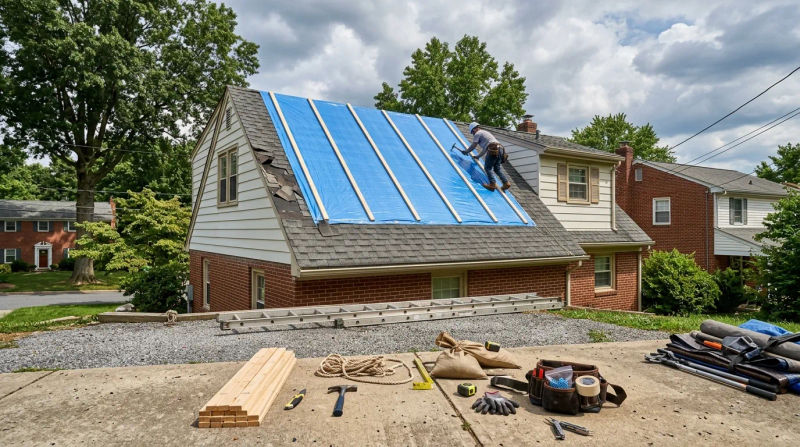
When a summer thunderstorm rolls through Claymont and you hear the dreaded sound of a tree limb hitting your roof or water dripping in the attic, cost is often the last thing on your mind - until it becomes the first. As a roofer with over a decade of experience in this area, I understand that panic and uncertainty. Your immediate priority is protecting your home, but you also need to know what to expect financially. My goal here is to provide a transparent, straightforward guide to emergency roof tarping costs so you can make a clear-headed decision when every minute counts.
An emergency tarp isn't just a piece of plastic; it's your home's first line of defense against thousands of dollars in potential water damage to insulation, drywall, and personal belongings. Let's break down the realistic costs and what goes into a professional, secure installation.
Average Costs in Claymont, DE
The price for an emergency tarp service in Claymont, DE, can vary, but it’s crucial to have a baseline. These costs are for a professional, insured crew to come to your home, assess the immediate hazard, and properly install a heavy-duty temporary cover. This isn't a handyman with a blue tarp; this is a standardized, secure process designed to protect your home for weeks or months while you arrange for permanent repairs.
Here are some typical price ranges you can expect in our area:
- Small & Simple Tarping ($400 - $750): This usually covers a small, localized area of damage, such as a few blown-off shingles on a single-story home with a low-to-moderate roof pitch. This is a common scenario for many of the 1.5-story Cape Cods we see in neighborhoods like Linwood, provided the damage is on an easily accessible roof plane.
- Medium & Standard Tarping ($750 - $1,500): This range typically applies to larger areas of damage, such as what might be caused by a fallen branch. It also covers jobs on steeper roofs or two-story homes, like the classic Colonials built in the 1940s throughout our community. The extra cost accounts for increased safety measures, more complex anchoring around features like dormers, and larger materials.
- Large or Complex Tarping ($1,500 - $3,000+): This is for significant storm damage, such as a large tree limb creating a hole in the roof deck, damage across multiple roof facets, or issues on very steep, high, or difficult-to-access roofs. These jobs require more time, a larger crew, and extensive materials to ensure a weatherproof seal.
The emergency roof tarping cost almost always includes the labor, the reinforced tarp itself, and the necessary fasteners, which should be wood battens or furring strips, not just nails driven through the tarp.
Factors That Affect Price
No two roof damage scenarios are identical. Several key variables influence the final price. Understanding these temporary roof cover price factors will help you understand any quote you receive.
- Size of the Damaged Area: This is the most straightforward factor. A 10x10 foot tarp installation will cost less than one covering a 30x30 foot section of your roof because it requires less material and less time to secure.
- Roof Height and Pitch: Safety is paramount for our technicians. Working on a steep-pitched roof or a second-story home requires extensive safety equipment, including harnesses and anchor points. This additional setup time and risk are factored into the cost. The gable roofs on many post-war Claymont homes are manageable, but the work becomes more complex when dealing with steep dormers on a Cape Cod.
- Accessibility: Can our trucks park near the house? Are there fences, landscaping, or power lines that obstruct ladder placement? If our crew has to carry equipment and materials a long distance or navigate obstacles, it will add to the labor time and overall cost.
- Time of Service: A call during standard business hours will naturally be less expensive than a call at 2 AM on a Sunday. Emergency, after-hours service often includes a premium call-out fee to mobilize a crew outside of their normal shifts. While it costs more, stopping a leak in the middle of the night can save you from catastrophic damage by morning.
- Debris on the Roof: If a tree limb has crashed through your roof, it needs to be safely cut and removed before a tarp can be placed. Minor debris removal is often included, but significant tree work may be a separate charge.
How to Get the Best Value
Getting the "best value" in an emergency doesn't mean finding the cheapest price. It means investing wisely to prevent much larger expenses down the road.
- Act Immediately: The after-storm roof tarp timeline is critical. The longer you wait, the more water can enter your home. The cost of a professional tarp installation is a fraction of the cost of replacing soaked insulation, moldy drywall, and ruined ceilings. Don't delay.
- Document for Insurance: Before anyone touches the roof, safely take photos of the damage from the ground and any leaks inside. A professional roofing company will also document the damage before they begin work. This documentation is essential for your homeowner's insurance claim. Most policies cover the cost of temporary, emergency repairs needed to prevent further damage.
- Hire a Professional Roofer: It can be tempting to hire a cheaper local handyman, but this can be a costly mistake. We’ve seen countless cases where tarps were nailed directly through shingles, causing hundreds of new holes and making the leak worse. Our crews are trained to secure tarps with wood battens along the edges. This method holds the tarp firmly without puncturing the undamaged parts of your roof, ensuring the temporary fix doesn't create a new problem.
- Ask for an Itemized Invoice: Ensure the contractor provides a detailed invoice that clearly states "emergency tarping to prevent further water damage." This is the language insurance adjusters look for and will make your reimbursement process much smoother.
Questions to Ask Your Contractor
In a stressful situation, it's easy to forget what to ask. Have this list handy to ensure you're hiring a competent professional.
- How quickly can you be here? (This establishes the immediate timeline.)
- What is your minimum fee for an emergency service call?
- How will you secure the tarp to the roof? (Look for the answer "with wood battens" or "furring strips.")
- Is your company and are your technicians fully insured for this type of work?
- Can you provide a detailed invoice for my insurance company?
- How long should this temporary cover last? (A professionally installed tarp should hold for several weeks or months, giving you time to schedule a permanent repair.)
- Will the technician who installs the tarp also be able to assess the roof for a permanent repair estimate?
Having a roof over your head is a basic necessity, and when it’s compromised, you need a fast and reliable solution. While the initial cost of a professional emergency tarping service may seem high, it is a critical and valuable investment in protecting the overall structure and interior of your home. It buys you peace of mind and the time needed to make a thoughtful decision about your permanent roof repairs.
For a personalized estimate in Claymont, contact Stewart MacGyver's roofer Co for a free consultation. Our team is ready to help you secure your home and navigate the next steps.