
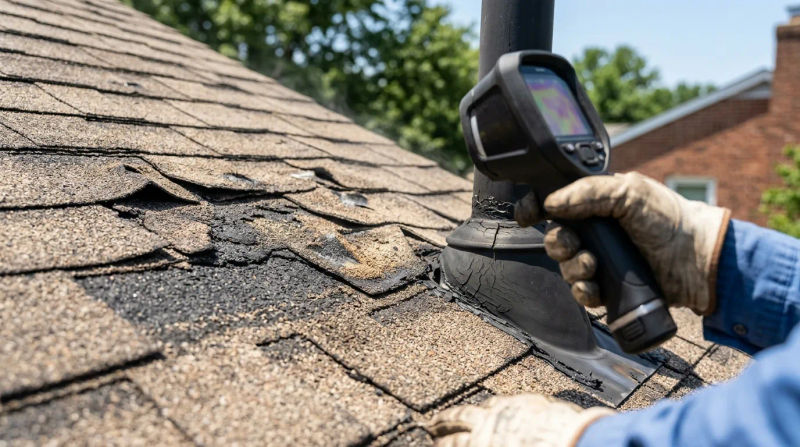
It’s a familiar feeling for many homeowners in Claymont during a July heatwave: the air conditioner is running constantly, yet the upstairs rooms remain uncomfortably warm and stuffy. You might blame it on the summer sun, but the real issue could be lurking right above your head. As a Senior Roofing Specialist with over a decade of experience in this area, I’ve seen firsthand how intense summer heat can silently stress a roofing system, leading to premature aging and eventual failure. Your roof is your home's first line of defense against the elements, and understanding the signs of heat stress is critical to protecting your investment.
Common Signs and Symptoms
The effects of extreme heat on a roof aren't always as dramatic as a leak. Often, the damage is slow and cumulative. Our trained crews are taught to spot these subtle indicators during an inspection. Here’s what you can look for:
- Shingle Blistering or Popping: Look closely at your shingles. Do you see small, raised bubbles or 'pocks' on the surface? These are classic shingle blistering symptoms. They occur when moisture trapped within the shingle vaporizes in the intense heat, causing the layers to separate. While a few blisters might be a manufacturing issue, widespread blistering is a strong sign of an overheated roof and attic space.
- Accelerated Granule Loss: The rough, sandpaper-like granules on your asphalt shingles protect the underlying asphalt from damaging UV rays. Extreme heat can bake the asphalt, causing it to lose its bond with these granules. If you’re noticing an unusual amount of black or colored sandy particles in your gutters and downspouts, it’s a sign your roof's primary defense is washing away.
- Curling or Distorted Shingles: Shingles are designed to lie flat. When a roof overheats, the thermal expansion and contraction can cause the edges and corners of the shingles to curl upwards or downwards. This not only looks bad but also makes them highly susceptible to being torn off by wind and allows wind-driven rain to get underneath.
- Warped or Spongy Roof Decking: This is one of the most serious overheated attic warning signs. From inside your attic, carefully look at the underside of your roof. The plywood or OSB sheathing should be flat and firm. If you see areas that look wavy, distorted, or feel soft and spongy to the touch, it indicates that excessive heat and moisture are trapped in the attic, causing the wood to delaminate and lose its structural integrity. This requires immediate roof decking warping checks by a professional.
- Cracked and Brittle Sealants: Your roof has various penetrations - vents, pipes, and chimneys - that are sealed with flashing and specialized caulk. Intense, prolonged heat can cause these sealants to dry out, shrink, and crack, creating perfect pathways for water to enter your home during the next summer thunderstorm.
- Peeling Paint on Eaves and Gables: If you notice paint blistering and peeling on your home’s exterior near the roofline, especially under the eaves, your attic may be the culprit. An extremely hot attic can radiate heat downwards and outwards, literally cooking the paint from behind.
- Soaring Energy Bills: If your AC can’t keep up and your cooling bills are higher than ever, it’s a strong indicator that your attic isn't properly ventilated. A superheated attic acts like a giant radiator on top of your house, forcing your HVAC system to work overtime to cool the living spaces below.
What Causes This Problem
Understanding the symptoms is the first step; knowing the root cause is key to finding a permanent solution. In our experience, roof heat damage is almost always traced back to one or more of these core issues.
First and foremost is inadequate attic ventilation. An attic needs a balanced system of intake vents (typically in the soffits or eaves) and exhaust vents (near the ridge or peak) to function. This system creates a continuous flow of air that pushes out the hot, moisture-laden air that builds up. If intake vents are blocked by insulation or paint, or if the exhaust ventilation is insufficient, the attic can’t breathe. The air stagnates, temperatures can soar to 150°F or more, and the destructive cycle begins.
This is a particular concern for some of the historic properties in our region. For example, in many of the beautiful pre-1940s Craftsman and Tudor homes found in neighborhoods like Arden, the original construction may not have included a ventilation system designed for modern insulation levels. Their unique and complex rooflines, while aesthetically pleasing, can also create pockets of trapped air that are difficult to vent without a carefully planned strategy.
Direct sun exposure and shingle color also play a significant role. Darker-colored shingles absorb more solar energy, leading to higher surface temperatures. While modern shingles are designed to withstand this, a poorly ventilated attic underneath will dramatically shorten their effective lifespan, regardless of color.
Finally, the age of the roofing materials is a factor. As a roof ages, the asphalt becomes more brittle and less flexible, making it more susceptible to damage from the thermal shock of hot days and cool nights.
When to Call a Professional
Some initial checks can be done safely by any homeowner. You can inspect your gutters for granules, check your attic for obvious signs of moisture or warped decking (being careful where you step), and visually inspect your roof from the ground with binoculars. These are valuable first steps in assessing your roof's health.
However, diagnosing the root cause and full extent of heat-related damage requires a trained eye. Getting on a roof is inherently dangerous, and only experienced professionals should do it. A qualified expert can tell the difference between a minor issue and a systemic failure in the making.
When our technicians conduct an inspection, we follow a standardized process. We don't just look at the shingles; we get into the attic to measure airflow, calculate the required ventilation for the space, and perform thorough roof decking warping checks. We examine all flashings, sealants, and penetrations. This comprehensive approach ensures we identify the root cause, not just the symptoms. An experienced professional can assess whether a simple ventilation upgrade will solve the problem or if the existing damage warrants more significant repairs.
Conclusion
Your roof can tell you a lot, especially during the peak heat of July. Symptoms like blistering shingles, excessive granule loss, and soaring energy bills are not just minor annoyances; they are clear signals that your roofing system is under stress. The primary cause is often an overheated attic resulting from poor ventilation, a problem that silently accelerates aging and sets the stage for costly failures.
By being proactive and learning to recognize these warning signs, you can address issues early, before a small problem becomes a major crisis. Don't wait for a leak to tell you something is wrong. Pay attention to the overheated attic warning signs your home is giving you now.
If you notice any of these signs, contact a local roofing professional for a thorough inspection. An expert assessment is the best way to understand the health of your roof and ensure your home is protected for all seasons to come.