
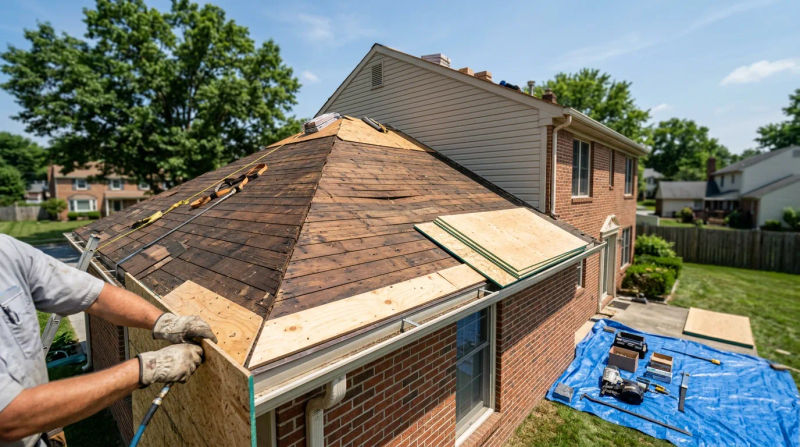
As a roofing specialist with over a decade of hands-on experience here in the Claymont area, I know that cost is the number one concern for homeowners facing a roof project. And nothing creates more anxiety than the unknown costs - the surprises that can pop up once a job is underway. One of the most common surprises is the discovery of soft, rotten roof decking after the old shingles are torn off. This is especially true during the summer. As homeowners schedule July reroofs, the combination of our region's humid air and sudden storms often reveals weak spots that have been festering for years.
My goal here is to give you a transparent, no-nonsense guide to budgeting for this potential issue. Understanding the costs and factors involved in roof decking replacement before your project begins is the best way to avoid stress and ensure your new roof is built on a solid foundation.
Average Costs in Claymont
First, let's establish a baseline. Roof decking, or sheathing, is the layer of wood (usually plywood or OSB) that sits on top of your roof's structural rafters and below the shingles. When we provide a roof rot repair estimate Delaware homeowners can count on, we price decking replacement on a per-sheet basis. A standard sheet measures 4x8 feet.
Here in the Claymont area, you can generally expect the following price ranges:
- Cost Per Sheet (Installed): For a single 4x8 sheet of standard OSB or plywood, the cost typically ranges from $85 to $150. This price includes the material itself, the labor to remove the old rotten sheet, and the installation of the new one.
So, what does this mean for your total project cost? It depends entirely on the extent of the damage.
- For Minor Repairs (1-5 sheets): If our crew finds a few isolated soft spots, perhaps around a chimney or vent pipe, you might expect to add $250 to $750 to your total roof replacement cost.
- For Widespread Replacement (20+ sheets): For an older home where moisture has been trapped for decades, it's not uncommon to replace a significant portion of the decking. For a typical 1,500-square-foot roof, replacing every sheet could add $3,500 to $7,000+ to the project. This is more common in the beautiful 1940s-era Cape Cods and Colonials we see in neighborhoods like Linwood, where original plank decking or years of moisture buildup have compromised the roof's structure.
It’s important to see this as a contingency. A well-prepared roofing estimate should account for this possibility, and we make sure our clients see a clear line-item price for decking before we even start.
Factors That Affect Price
The per-sheet price isn't pulled out of a hat. Several key factors influence the final roof decking replacement cost, and understanding them will help you see where your money is going.
- Material Choice and Thickness: The plywood roof sheathing price Claymont contractors pay can vary. The two main options are OSB (Oriented Strand Board) and plywood. Plywood is generally considered a superior material due to its layered construction, which provides better moisture resistance and fastener-holding power, but it costs more than OSB. Thickness also matters. Most residential roofs require at least 1/2" sheathing, but some local codes or low-slope roofs may require 5/8" or thicker, which increases material cost.
- The Extent of the Damage: This is the single biggest variable. A small, contained area of rot is a quick fix. Widespread decay that affects large sections of the roof requires significantly more time and material. During tear-off, our technicians carefully inspect the entire roof surface, sounding the wood to find any non-obvious soft spots.
- Decking Replacement Labor Cost: Labor is a major component of the price. Replacing sheathing isn't just about nailing down a new board. Our trained crews follow a standardized process that includes:
- Careful removal of rotten decking without damaging the underlying rafters.
- Thorough inspection of the exposed rafters and trusses for any signs of moisture damage or structural rot.
- Precise cutting and fitting of new sheets, especially in complex areas like valleys, hips, or around dormers.
- Using the correct fasteners and spacing pattern to meet or exceed local building codes, ensuring your roof can withstand high winds.
- Roof Complexity and Pitch: A simple, low-pitch gable roof on a rectangular home is far easier and faster to work on than a steep, cut-up roof with multiple dormers, valleys, and skylights. The 1.5-story Cape Cods common in our area often have dormers that create more complex angles, increasing the labor time required for a precise fit.
- Underlying Structural Repairs: In severe cases, the rot isn't confined to the sheathing. Water may have damaged the rafters or trusses that support the entire roof. If our inspection reveals this, it becomes a separate and more involved structural repair that must be addressed before new decking can be installed.
How to Get the Best Value
Getting the best value isn't about finding the cheapest price; it's about making a smart, long-term investment in your home's safety and integrity. From my experience on job sites, here are the most effective ways to do that.
- Never Roof Over Rotten Decking: Some contractors might offer a lower price by suggesting they can just install new shingles over a few "minor" soft spots. This is a critical mistake. Shingles installed over spongy, weak decking won't seal properly, nails won't hold, and the new roof is destined for premature failure. It will also void any manufacturer warranty. The only correct solution is to cut out the rot and replace it.
- Budget for a Contingency: If you live in a home built before 1980, I strongly advise setting aside 10-20% of your total roofing budget for potential decking replacement. The odds are high that some will be needed. By planning for it, the cost won't be a disruptive surprise, but rather an expected part of the process.
- Address the Root Cause: Why did the decking rot in the first place? Often, the culprit is poor attic ventilation. Trapped heat and moisture in the summer and winter condense on the underside of the cool roof deck, leading to rot from the inside out. When replacing decking, it's the perfect time to assess and improve your attic's intake and exhaust ventilation. Fixing the decking without fixing the ventilation is just treating a symptom, not the disease.
- Demand an Itemized Quote: A professional contractor will always be transparent about potential costs. Your contract should include a specific, per-sheet price for decking replacement. This protects you from arbitrary charges added at the end of the job. At Stewart MacGyver's roofer Co, our proposals clearly state the cost for any necessary decking replacement, ensuring you have all the information up front.
Questions to Ask Your Contractor
When you're comparing estimates, you are in control. Use these questions to vet contractors and ensure you're hiring a true professional who prioritizes quality over speed.
- What is your exact per-sheet price for decking replacement, and what does it include (material, labor, disposal)?
- What type and thickness of sheathing do you propose using, and why is it the right choice for my home?
- How will you show me where and why decking needs to be replaced? (The answer should be: with clear photos or by showing you directly.)
- What is your process for inspecting the rafters beneath the sheathing once it’s removed?
- Will the final invoice clearly list the number of sheets replaced as a separate line item?
- How much of a delay will a significant decking replacement add to the project timeline?
An experienced crew leader should be able to answer these questions confidently and clearly.
Replacing roof decking might feel like an unwelcome expense, but it’s one of the most important investments you can make in your home. A new roof is only as good as the foundation it's built on. By understanding the potential costs and planning ahead, you can ensure your project goes smoothly and results in a safe, secure, and long-lasting roofing system.
For a personalized estimate and a thorough inspection of your roofing system in the Claymont area, contact Stewart MacGyver's roofer Co for a free consultation. We'll help you budget accurately and make an informed decision.