
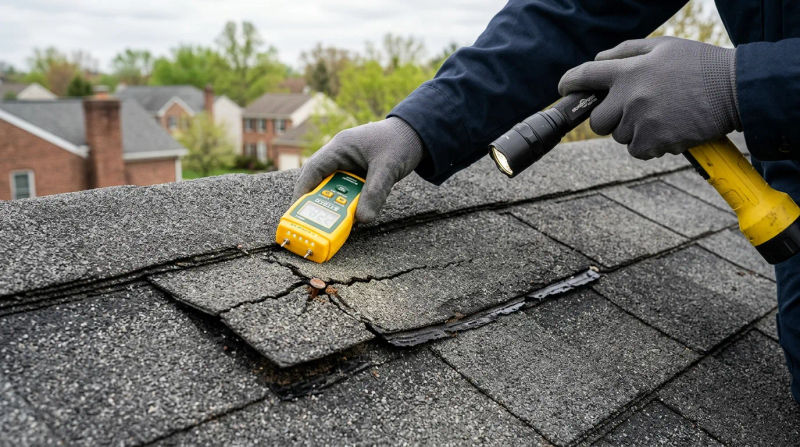
The first truly warm days of May are a welcome sight here in Delaware. You’re opening windows, planning your garden, and finally putting winter behind you. Then, after a heavy spring shower, you spot it: a faint, brownish stain on the ceiling in an upstairs bedroom. Or maybe you notice a small, persistent drip in your attic. It’s confusing because your roof made it through all the snow and ice without a problem - or so you thought. What you’re likely seeing is a classic spring roof leak, a delayed problem that has been developing all winter long.
As a Senior Roofing Specialist with over a decade of hands-on experience in the Claymont area, I’ve seen this exact scenario play out countless times. The quiet damage that occurs during the winter often doesn't become apparent until the spring rains arrive. Understanding the signs and causes can help you catch these issues before they escalate into major repairs.
Common Signs and Symptoms
Spotting a leak early is the key to minimizing interior damage and repair costs. A roof leak after winter near Claymont can manifest in subtle ways that are easy to overlook if you don't know what you're looking for. Our technicians are trained to identify these clues during routine inspections. Here are some of the most common spring roof leak signs New Castle County homeowners should watch for:
- Interior Water Stains: The most obvious sign. Look for discolored patches on ceilings or walls, often circular and brownish. Don't be fooled by size; a small spot can indicate a much larger, saturated area in the attic insulation above.
- Drips and Puddles: Active dripping during or after rainfall is a clear red flag. Check your attic, crawl spaces, and the top floors of your home regularly.
- Peeling or Bubbling Paint: Moisture seeping into the drywall or plaster behind your paint will cause it to bubble, blister, or peel away from the surface. This is often seen on walls near the ceiling line.
- Mold or Mildew Growth: Dark, spotty patches of mold or a musty smell in upper-floor rooms or closets indicate a persistent moisture problem. This not only signals a leak but can also pose health risks.
- Damp or Compressed Attic Insulation: If you can safely access your attic, check the insulation. If it appears wet, matted down, or stained, water is getting in from above. Wet insulation loses its R-value and becomes a breeding ground for mold.
- Exterior Roof Damage: From the ground, use binoculars to look for missing, cracked, or curled shingles. Pay special attention to areas around chimneys, vents, and skylights.
- Granules in Gutters and Downspouts: Asphalt shingles have a top layer of mineral granules that protect them from UV rays. A significant accumulation of these granules in your gutters is a sign that your shingles are aging and deteriorating, making them more vulnerable to leaks.
What Causes This Problem
The primary culprit behind most spring roof leaks is the relentless cycle of winter weather. The phenomenon of freeze thaw roof damage Delaware is particularly hard on roofing systems. The process is simple but destructive.
- Water Intrusion: Rain, melting snow, or ice finds its way into minuscule, often invisible, cracks and gaps in your roofing materials. These openings are common around flashing (the metal strips that seal joints), nail heads, and the seals around pipes and vents.
- Freezing and Expansion: As temperatures drop below freezing overnight, that trapped water turns to ice. When water freezes, it expands by about 9%. This expansion acts like a tiny, powerful jack, subtly widening the crack or pushing up a fastener.
- Thawing and Repeating: When the temperature rises above freezing, the ice melts, and the water seeps deeper into the newly enlarged gap. The next time it freezes, the process repeats, progressively worsening the opening throughout the winter.
After months of these freeze-thaw cycles, a tiny entry point can become a significant pathway for water. Come spring, the heavier, more consistent rains find these new vulnerabilities, and water begins to make its way into your attic and home. Homes in communities like Arden, with their beautiful pre-1940s Arts and Crafts or Tudor Revival architecture, often feature complex rooflines with multiple gables, valleys, and dormers. While aesthetically pleasing, these features create more seams and joints, providing more opportunities for the freeze-thaw cycle to compromise seals and flashing details.
Other common causes we encounter include:
- Ice Dams: Thick ridges of ice that form at the edge of a roof can prevent melting snow from draining properly. Water backs up behind the dam and can seep under shingles.
- Damaged Flashing: The metal flashing around chimneys, vents, skylights, and in roof valleys is a common failure point. If it's old, rusted, or was installed improperly, it won't be able to keep water out.
- Aged or Damaged Shingles: Over time, shingles become brittle and can be damaged by wind, hail, or falling debris, creating direct entry points for water.
When to Call a Professional
While a homeowner can and should perform visual inspections from the ground and check for interior signs of a leak, diagnosing the exact source requires expertise. Water rarely drips straight down; it can travel along rafters, trusses, and the top of your ceiling before it finds a place to emerge. This can make the interior stain appear far from the actual leak on the roof.
Attempting a DIY roof repair is risky for several reasons. Walking on a sloped, potentially wet roof is dangerous without the proper safety equipment and training. Furthermore, an improper repair can often make the problem worse, potentially voiding your roof's warranty and leading to more extensive damage down the road.
You should call an experienced professional when:
- You see any interior signs of a leak, no matter how small.
- You suspect damage but cannot identify the source.
- Your roof is over 15 years old and has not been recently inspected.
- You have found significant debris, such as shingle granules or broken pieces of roofing material, in your gutters.
Our technicians use a standardized, methodical process to trace leaks from the point of entry inside back to the source on the roof. This systematic approach ensures we don't just patch the symptom; we identify and resolve the root cause to prevent future issues. This level of diagnostics is something that only comes with years of field experience.
Conclusion
Winter can be tough on a roof, and the evidence often doesn't show up until spring. The freeze-thaw cycle is a powerful force that silently creates vulnerabilities in even well-maintained roofing systems. By being vigilant for the common spring roof leak signs - from ceiling stains to granules in your gutters - you can catch problems early.
Don’t wait for a small drip to become a major headache. The relatively mild weather of May provides an ideal window to address any potential spring roof leaks before the heavier storms of summer arrive. Acting now protects your home's structure, prevents mold growth, and ultimately saves you money and stress. An ounce of prevention is truly worth a pound of cure when it comes to your roof.
If you notice any of these signs, contact a local roofing professional for an inspection.