
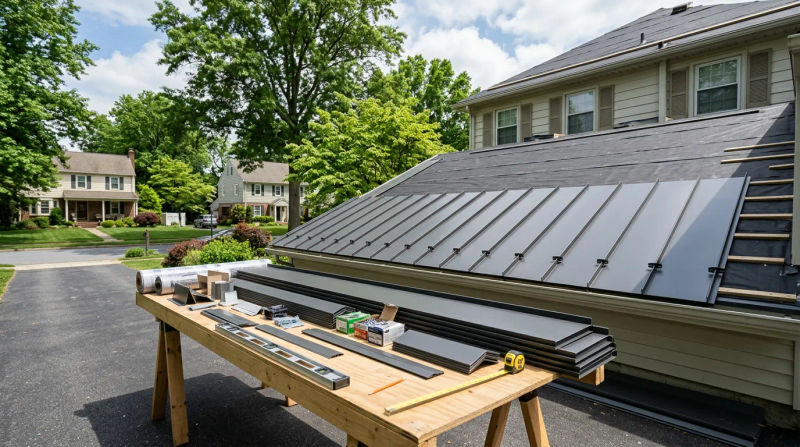
As a Senior Roofing Specialist with over a decade of hands-on experience in the Claymont area, I know that replacing a roof is a significant investment. One of the first questions I always get from homeowners is, "What's this going to cost?" It's the most important question, and you deserve a transparent answer. If you're considering the long-term benefits of a standing seam metal roof, you're making a smart choice for durability and performance. This guide is designed to give you a clear, honest look at the costs involved so you can budget effectively and make an informed decision for your home.
Average Costs in Claymont
Let's get right to it. A standing seam metal roof is a premium product, and its price reflects its longevity and durability. For a typical home in the Claymont, DE area, you can generally expect the standing seam metal roof price Delaware to fall between $14.00 and $22.00 per square foot, installed.
For a modest, 1,500-square-foot roof on a classic post-WWII Cape Cod in a neighborhood like Linwood, this could translate to a total project cost of roughly $21,000 to $33,000. A larger 2,500-square-foot roof on a two-story Colonial might range from $35,000 to $55,000 or more, depending on complexity.
It's important to understand these are ballpark figures. May is a great time to get quotes because the more consistent weather allows us as installers to plan efficiently. Here in Claymont, we have to account for our cold winters and spring storm swings. That means a proper quote should always include line items for high-quality synthetic underlayment and strategically placed ice and water shield, especially along eaves and in valleys, to prevent ice damming issues.
Factors That Affect Price
No two roofing projects are identical. Several key factors will influence your final metal roof cost. Our crews are trained to assess each of these during an inspection to provide a precise estimate.
- Roof Size & Complexity: The biggest factor is the total square footage of your roof. However, complexity is just as important. A simple, low-pitch gable roof on a 1940s-era rectangular home is more straightforward to install than a roof with multiple dormers, steep pitches, valleys, and skylights. Each penetration and change in roof plane requires custom cutting, flashing, and sealing, which increases labor time and material waste.
- Material Selection: Standing seam panels come in different materials and thicknesses (gauges). The most common choice is Galvalume steel, which offers a great balance of strength and cost-effectiveness. Aluminum is a lighter, more corrosion-resistant option, ideal for coastal areas, but it comes at a higher price point. The paint finish also matters. A premium Kynar 500® finish offers superior fade and chalk resistance compared to a standard SMP (Silicone Modified Polyester) finish, but it adds to the cost.
- Labor and Installation: Standing seam metal roofing is not a DIY-friendly project. It requires specialized tools and expertise. The standing seam install cost Brandywine Hundred reflects the high level of skill our technicians bring to every job. Proper installation involves precise panel alignment, correct fastener placement, and expert flashing techniques to ensure a weathertight seal that lasts for decades. An organized workflow and standardized processes are key to ensuring quality and efficiency.
- Tear-Off and Disposal: Before a new roof can go on, the old one must come off. The metal roof tear-off and disposal pricing Claymont depends on the type and number of existing roof layers. A single layer of asphalt shingles is relatively simple to remove. However, on older homes, like many built in the 1940s, we sometimes find two or even three layers of old roofing that must be stripped down to the deck. This adds significant labor and disposal costs.
- Roof Deck Condition: Once the old roofing is removed, we inspect the underlying wood deck. In my experience, it's common to find some water damage or rotted sheathing, especially around chimneys or in valleys on older homes. Any compromised decking must be replaced to provide a solid, secure base for the new metal panels. This is a common variable that can't be fully quoted until the tear-off is complete, but an experienced inspector can often identify potential problem areas beforehand.
- Underlayment and Accessories: We never cut corners on what goes underneath the metal. A high-temperature, synthetic underlayment is essential to protect your home during installation and act as a secondary water barrier. As mentioned, ice and water shield, new ventilation components, custom flashing, and trim all contribute to the final cost but are critical for the long-term performance of the system.
How to Get the Best Value
Getting the best value doesn't mean finding the cheapest price. With a 50+ year product like a metal roof, value comes from a quality installation that you don't have to worry about for the rest of your time in the home.
- Think Long-Term: An asphalt roof might need to be replaced two or even three times over the lifespan of a single standing seam metal roof. When you factor in the lower maintenance, superior weather resistance, and potential energy savings from reflective finishes, the higher initial investment in metal often proves to be more cost-effective over the long run.
- Compare Detailed Quotes: Don't just look at the bottom-line number. A quality quote will be itemized, showing you the costs for materials, labor, tear-off, disposal, and underlayment. If one quote is significantly lower than others, find out what's being left out. Is it a lower-quality material? Are they insured? Are they skipping crucial steps like replacing old flashing?
- Prioritize Workmanship: The best materials in the world will fail if installed incorrectly. Look for a contractor with a dedicated team of trained technicians who specialize in metal roofing. Check their reviews, ask to see a portfolio of their work, and ensure they have a standardized process for quality control.
Questions to Ask Your Contractor
To help you vet potential installers, here are the questions I'd be asking if I were in your shoes:
- Are you licensed to work in Delaware and do you carry both general liability and worker's compensation insurance?
- What specific brand and type of metal panel, underlayment, and sealant do you use?
- How will you handle flashing around my chimney, vents, and in roof valleys?
- What is your process for protecting my landscaping and property during the tear-off and installation?
- Do you provide a warranty for your workmanship, and what does the manufacturer's material warranty cover?
- Who will be my point of contact on-site during the project?
Choosing a new roof is a big decision, but it doesn't have to be a stressful one. By understanding the factors that drive cost and knowing what to look for in a quality contractor, you can be confident in your investment. A standing seam metal roof, when installed correctly, provides decades of protection and peace of mind.
For a personalized estimate in Claymont, contact Stewart MacGyver's roofer Co for a free consultation. We'd be happy to provide a detailed, transparent quote for your home.